Chain Bridge

Contents
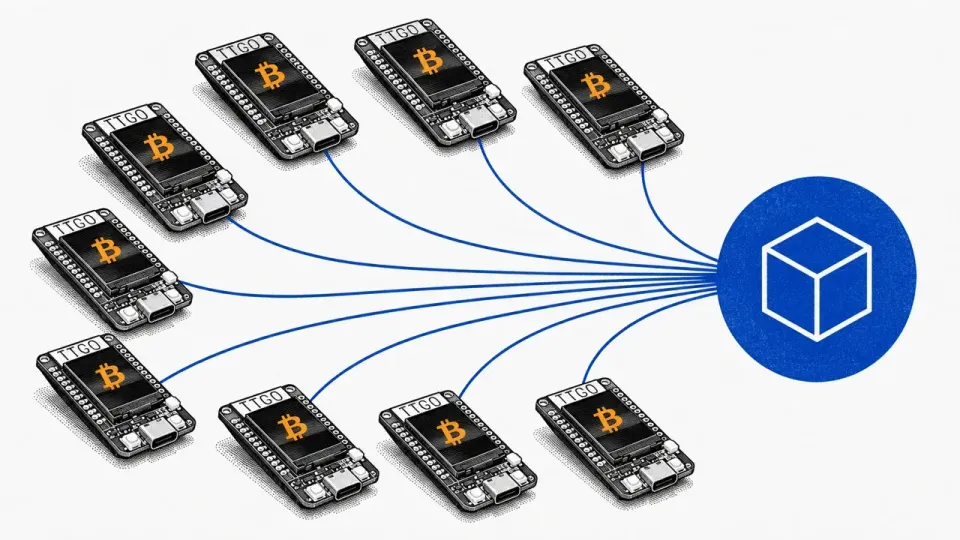
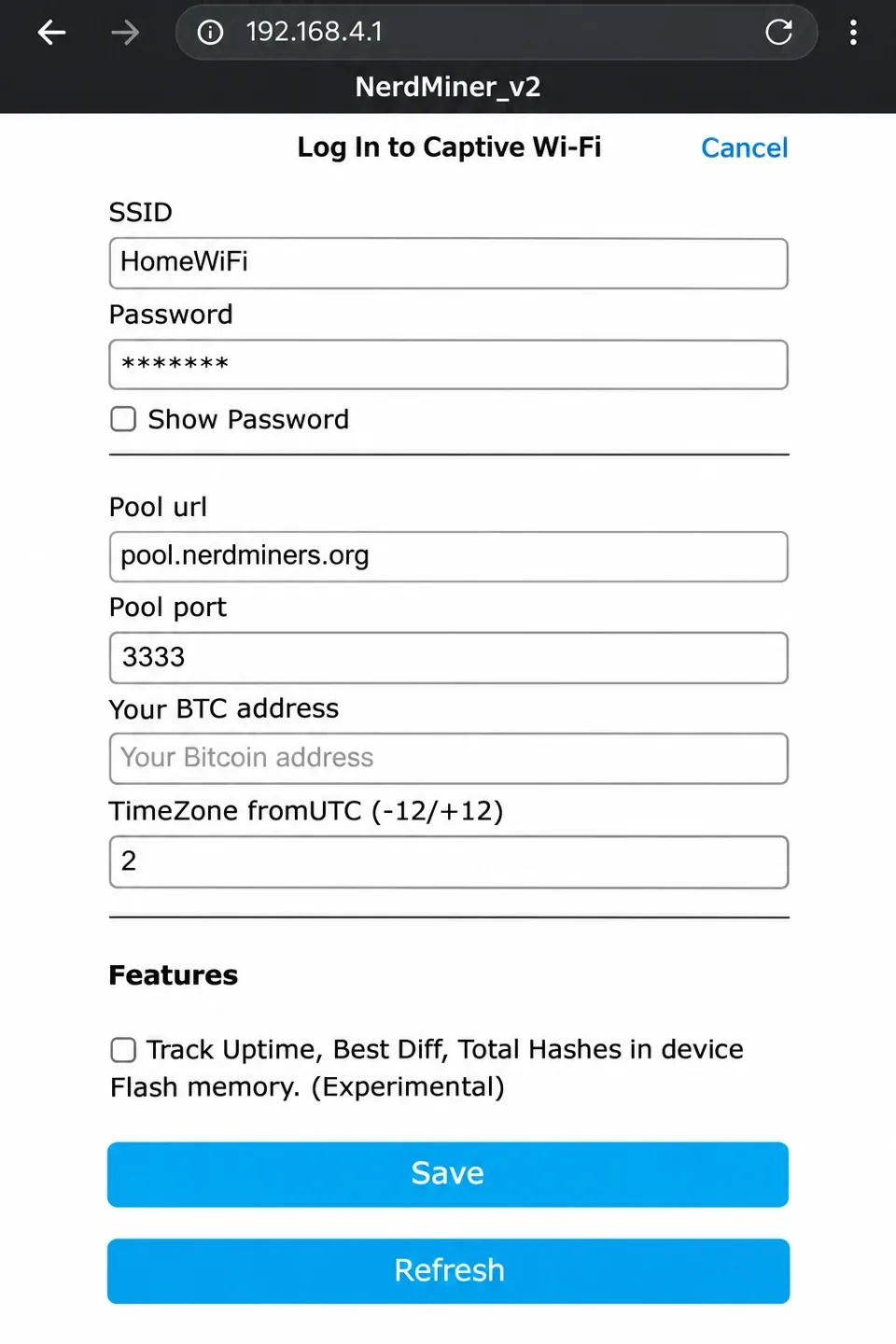
A NerdMiner needs a pool that accepts its unusually low share difficulty. For the original NerdMiner_v2 firmware, I'd start with an endpoint explicitly documented for NerdMiners: pool.nerdminers.org, port 3333. Choosing a large Bitcoin pool by reputation alone doesn't tell you whether this tiny miner can submit useful shares there.
Use the pool's connection instructions
The Nerdminers pool documents that hostname and port, says it supports NerdMiners and similar micro miners, and describes modifications for ultra-low difficulty. Its published policy charges NerdMiners no pool fee. That is an operator's policy, not an uptime guarantee or an audit of its infrastructure.
Another operator, NerdMiner.io, lists pool.nerdminer.io with port 3333. Notice the singular nerdminer in that hostname. The two addresses are separate services. Use one complete matching hostname-and-port pair instead of combining values from different guides.
| Setting | Nerdminers.org | NerdMiner.io |
|---|---|---|
| Hostname | pool.nerdminers.org | pool.nerdminer.io |
| Port | 3333 | 3333 |
| Compatibility claim | Operator documents micro-miner support | Operator documents ESP32 miner support |
| What this establishes | Published connection settings; not a measured speed or reliability ranking | |
Why older Public Pool instructions can disagree
The NerdMiner project's README lists Public Pool among its low-difficulty options, including a historical port. The current Public Pool interface presents several protocol and payout modes. Those are different connection choices; a general Stratum endpoint isn't proof of compatibility with the original ESP32 firmware.
Some seller guides recommend older Public Pool settings while others report changes to micro-miner support. Don't resolve that conflict by cycling through random ports. Use a pool that currently documents your miner type, or obtain confirmation from the operator before changing to a different protocol or endpoint.
Save the old hostname and port together. If the replacement produces no jobs, restore that known configuration before changing another variable.
Change one setting and check the result
Record your existing pool and payout address before reopening the miner's configuration. Original firmware uses separate pool URL and port fields. A vendor firmware may instead ask for a complete Stratum URI; follow the fields shown by that software.
Save the new endpoint, let the miner reconnect and look for incoming block templates. Next, check the pool's public address-based statistics for accepted work. A local hashrate reading and a pool's estimated hashrate measure different things, so don't expect them to match instantly.
A standard CKPool or ASIC endpoint isn't interchangeable with a micro-miner fork just because both use Stratum. The operator must accept the difficulty this firmware can submit.
Choose a working connection, not an income claim
Solo mining doesn't provide a regular proportional payout for each submitted share. A share helps the operator account for work; finding a valid Bitcoin block is a much higher threshold. Pool choice cannot turn an ESP32 learning device into a dependable source of income.
If neither documented endpoint receives work, check the Wi-Fi, address and outbound-connection branches before installing a different firmware. Changing multiple variables at once makes the original fault harder to locate.