Chain Bridge

Contents
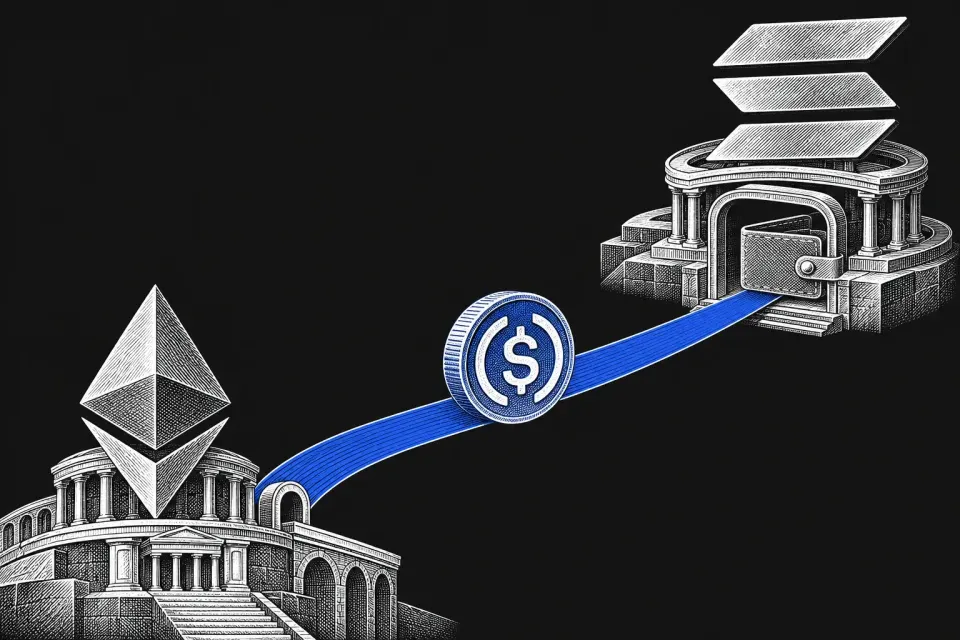
To move USDC from Ethereum to Solana, choose a crosschain route that explicitly delivers native USDC on Solana, then verify the Solana receiving account before signing. A normal Ethereum Send won't change networks, and a route that delivers SOL has swapped your asset. For a USDC balance, I would start with a supported CCTP route whose quote explains destination completion and account creation.
Choose native USDC as the Solana output
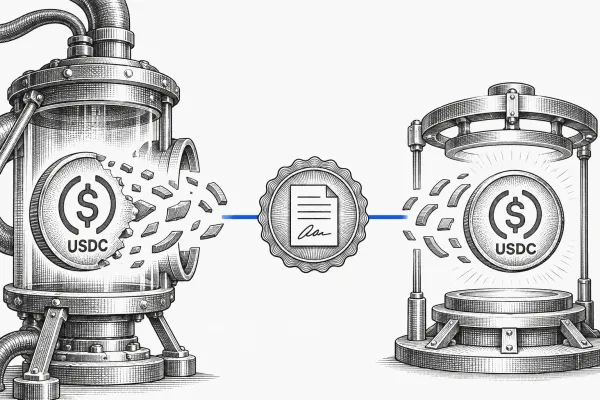
Circle's CCTP support directory includes Ethereum and Solana. For native USDC, CCTP burns the source tokens and completes the transfer on the destination through Circle's attestation process. An application's offered routes can be narrower than the protocol's support, so check your actual source, output and receiving network.
Verify the starting balance on Ethereum mainnet. USDC on Base or Arbitrum is on a different network even if the wallet shows the same account address. A wrapped USDC representation also isn't automatically accepted as the native source token. Circle's mainnet token directory identifies the relevant assets:
| Network | Native USDC identifier | Use |
|---|---|---|
| Ethereum mainnet | 0xA0b86991c6218b36c1d19D4a2e9Eb0cE3606eB48 | Verify the source ERC-20 token contract. |
| Solana mainnet | EPjFWdd5AufqSSqeM2qN1xzybapC8G4wEGGkZwyTDt1v | Verify the destination SPL token mint. |
Check the output token as carefully as the destination chain. Some “bridge to Solana” routes deliver native SOL after a swap. Others can deliver a wrapped asset. If the receiving app requires the mint above, reject a quote that ends in a different token. The native versus bridged USDC comparison explains the additional representation risk.
A CCTP route avoids holding a bridge-issued wrapper for this native-USDC transfer, but still depends on Circle, the relevant contracts and chains, and the application handling your route. I wouldn't choose an interface solely because its headline promises the fastest or cheapest bridge.
Applications can deliver that native token through different processes. Across's Solana route explanation, for example, describes relayers fronting destination USDC and CCTP used for rebalancing. That isn't the same user-completion process as waiting for your own burn's destination mint. Read the selected application's route and recovery instructions before applying a direct-CCTP claim procedure.
Prepare the Solana recipient and its token account
For a self-custody destination, select the intended wallet account and copy its Solana receiving address. In Phantom Extension, open Home, choose Receive, and use the copy control on the Solana row. Phantom's receiving instructions distinguish that row from Ethereum and the other networks. On mobile, the entry is Deposit > Receive Crypto.
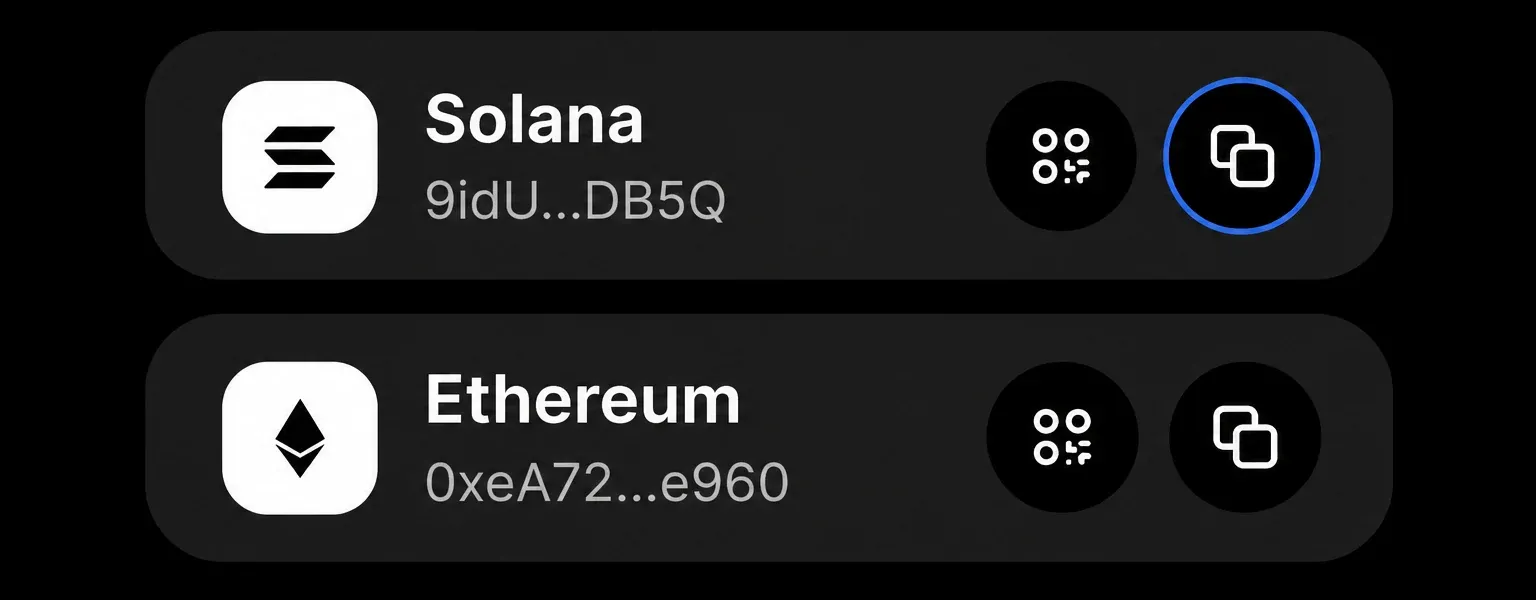
A bridge may read that address from a connected Solana wallet instead of asking you to paste it. Check the complete resolved recipient either way. Connecting the correct Ethereum account doesn't establish the correct Solana account, especially if you use several wallet accounts.
There is an important distinction underneath this wallet view. A Solana token account stores a balance for one mint and one owner. Its associated token account is derived for that wallet and mint; it can have a different address from the wallet itself. Solana's token-account guide explains that relationship.
For a direct CCTP transfer into Solana, Circle requires the message's mintRecipient to identify a USDC token account, and that account must exist when the destination receive instruction runs. This is explicit in Circle's Solana recipient notes. A consumer bridge can derive and create the account from your wallet address. Confirm that it handles this step; don't paste a wallet address into a developer-level token-account field on the assumption that the two are interchangeable.
For an exchange destination, follow that exchange's current Solana USDC deposit instructions, including its minimum and acceptance conditions. I'd use a wallet I control first if the bridge can't clearly support the exchange's recipient arrangement. A successful mint doesn't establish that an exchange will credit an unsupported deposit.
Review fees and complete the selected route
Keep enough ETH on Ethereum for the source wallet's actual fee estimate. ETH on another network doesn't pay ordinary Ethereum mainnet gas. On the Solana side, determine whether the bridge pays destination execution and token-account creation, or expects you to fund them. Solana fees are paid in SOL; account creation also needs a storage balance, which can be funded by the application or another payer.
USDC arriving in your wallet doesn't automatically provide SOL for a later send or swap. If the route offers a gas drop-off, read its amount and cost separately from the USDC output. I would keep the intended USDC receipt clear rather than accept an unexplained conversion into SOL.
- Open the bridge through its verified project link. Select Ethereum mainnet as the source, the verified native USDC balance, and Solana mainnet with native USDC as the output.
- Connect or enter the intended Solana recipient as the interface requires. Confirm the complete address and the bridge's handling of its USDC token account.
- Enter the amount and review the received USDC after all quoted charges. Distinguish source gas from protocol, service and destination costs; inspect any added swap and its minimum output.
- Review each wallet request. A token approval grants spending permission; the following transfer still needs its own confirmation. Resolve an unexpected spender, token, network or amount before signing.
- Save the bridge's transfer record and source hash. Follow its stated automatic-completion or manual-claim process, then inspect the destination transaction before sending the remaining balance.
A small first transfer can check the selected route and account when the fees and receiving minimum make it useful. It doesn't establish future bridge security or guarantee completion of a larger transfer.
For a CCTP route, Fast and Standard describe source-attestation finality choices. Circle's finality guidance reports attestation availability, not an end-to-end delivery guarantee. Compare the current quote's full cost and completion process rather than treating a Solana block time as the duration of an Ethereum-to-Solana bridge transfer.
Confirm Solana delivery before troubleshooting the display
Check the destination transaction on the Solana explorer linked from the transfer record. Confirm success, the received amount and the native USDC mint. If the credited token-account address differs from your wallet address, inspect its owner and mint before concluding that the funds went elsewhere.
If the Ethereum transaction succeeded but there is no Solana transaction, investigate the existing bridge transfer. Source confirmation alone doesn't prove destination completion. A CCTP route can still need attestation, destination submission or account setup. Use its official resume or support process; importing a token in Phantom won't complete a missing mint.
If the Solana transaction confirms the correct USDC and owner, follow Phantom's missing-token checks, including the hidden-token list. If the output was SOL or another token, revisit the quote instead of repeatedly adding USDC to the display.
Give official support the public source hash, destination signature if available, intended recipient and selected route. Never send a recovery phrase or private key. For the receiving wallet's ordinary transfers and fee options after delivery, use the bridge and token guides; the next action should match the network that received the funds.