Chain Bridge

Contents
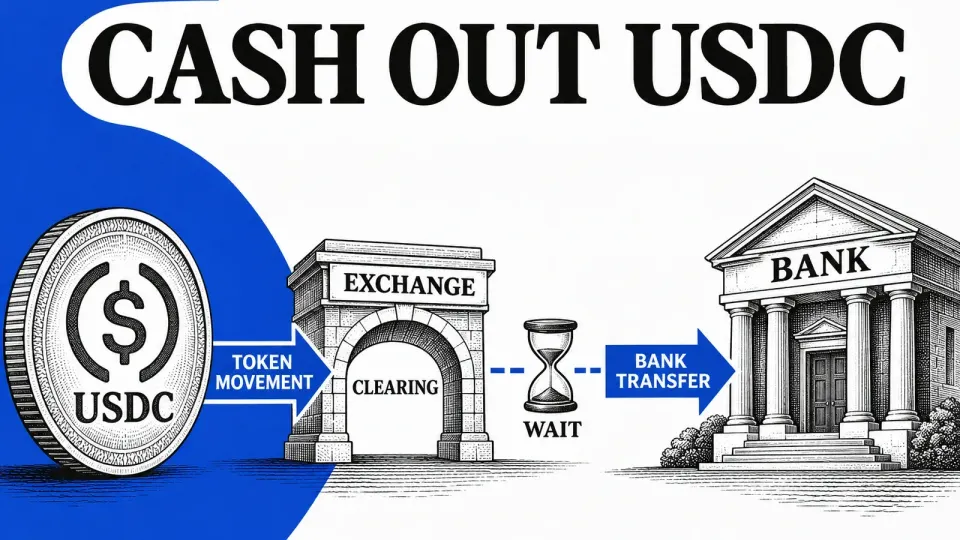
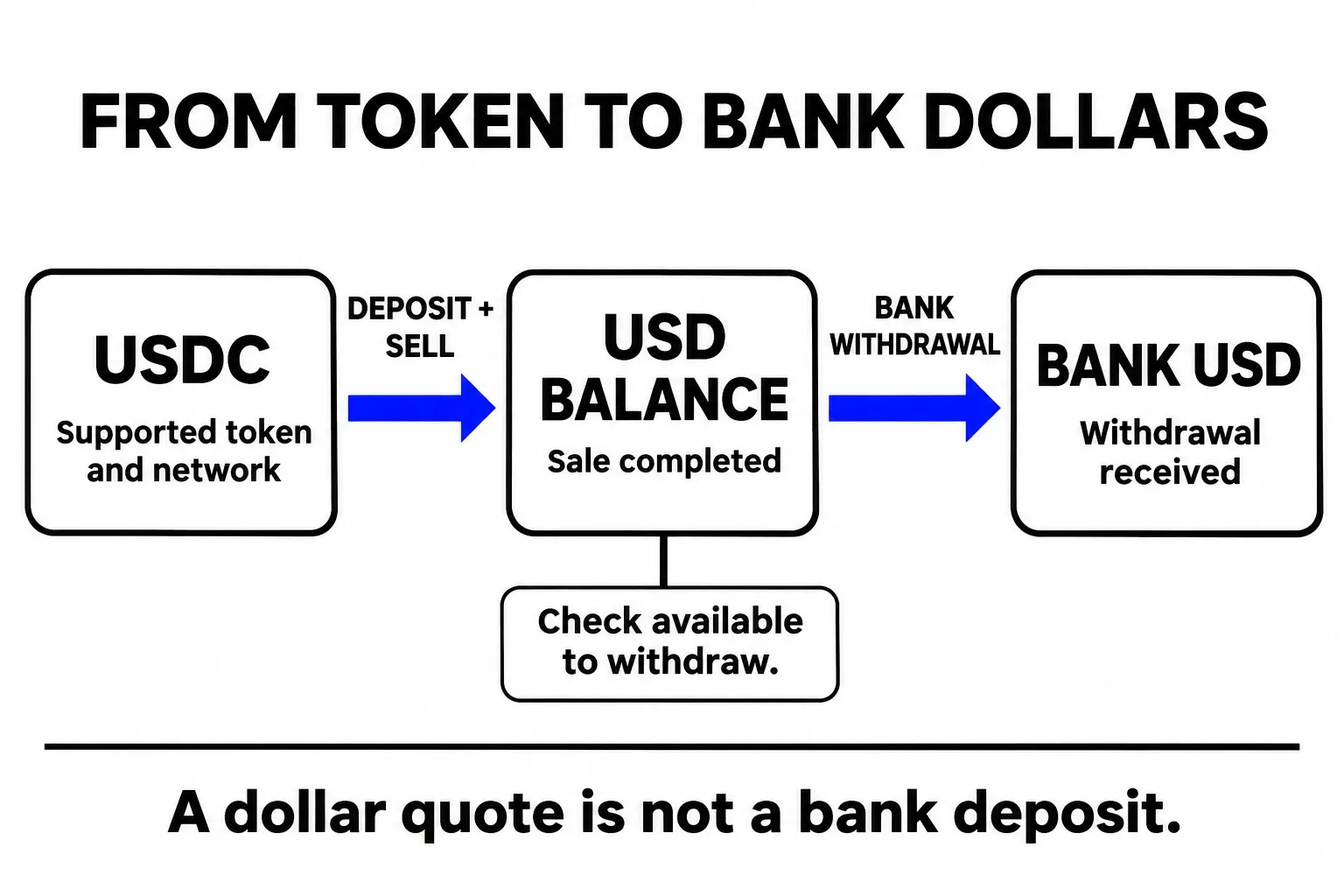
To sell USDC for dollars, choose an eligible exchange or cash-out provider, confirm that it accepts your USDC token and network, then review and accept its USD sale quote. On an exchange, withdraw the available USD balance to your bank after the sale; a direct cash-out service can combine the sale and bank payout in one order. I'd confirm the payout method before sending USDC, because a completed sale is little use if you can't receive the money.
The steps below focus on a US retail holder receiving USD in a bank account. A crypto swap serves a different goal: exchanging USDC for another token leaves you with a crypto balance. If you want bank dollars, the route needs a supported fiat payout as well as a sale.
Choose an exchange sale or a direct cash-out order
An exchange makes sense when your USDC is already credited there or you want to compare its sale tools before withdrawing. Kraken's USDC sale page supports selling USDC for USD, followed by a separate bank withdrawal. Its public sale page doesn't establish your account's withdrawal eligibility; check the funding conditions below before depositing.
A direct cash-out provider can offer a combined quote for selling tokens from your wallet and receiving fiat. MoonPay's sale flow, for example, asks you to choose the asset and payout method before completing the order. Check that USDC, its network and a suitable USD payout are offered to your account. A service's general list of supported countries or payment methods doesn't establish that every combination is available.
Other sale routes lead to different checks. A card payout needs a supported receiving card. In a peer-to-peer sale, you trade with another user and follow the platform’s escrow and payment-confirmation process. The steps here cover a provider sale with a USD bank payout; they aren’t a P2P trading tutorial.
Compare both routes using the final dollars you expect to receive for the same starting USDC amount. A service fee alone leaves out the sale rate, any transfer needed to reach the service and the cost of the payout. If a route doesn't offer the required token, network or bank method, choose another eligible route before moving funds.
Separate the dollar estimate from spendable bank cash
Circle's USDC terms for holders outside the EEA state that each USDC is intended to maintain a value of $1 and that direct redemption is subject to eligibility, applicable law, the terms and any applicable fees. The same terms explicitly give no guarantee of price stability on third-party platforms. A reference price, an executable sale quote and an available bank balance therefore answer different questions.
A converter such as MetaMask's USDC/USD page can help estimate value. For a sale, use the actual provider's quote for your amount. Read the resulting USD amount and the quote's expiry conditions before committing; rounding on a public price page can hide a difference that matters on a larger balance.
Confirm a usable withdrawal route before sending USDC
Start with a provider that serves your location and account type. Complete the required verification, confirm that a USD bank withdrawal is available to you, and check the receiving bank details. If no suitable bank withdrawal is available, stop before depositing and choose another eligible provider. A USDC/USD converter on the public website doesn't establish that you can cash out there.
Kraken provides a concrete example of the distinction. Its ACH withdrawal requirements call for a verified US-registered Kraken account and a US bank or financial-institution account in the same name. That method excludes residents of Texas and New York. Access to another Kraken feature doesn't establish eligibility for ACH.
The following published USD withdrawal conditions help compare the bank leg. They are provider terms, not measured arrival times or the total cost of selling USDC. Kraken says the funding details in your account provide the current conditions and that processing estimates can be delayed.
| Kraken USD method | Published minimum and withdrawal fee | Published processing estimate | Eligibility check |
|---|---|---|---|
| ACH | $1 minimum; no withdrawal fee. | 0–2 business days. | Eligible verified US accounts; same-name US bank account; Texas and New York excluded. |
| FedWire through Customers Bank or Dart Bank | $20 minimum; $4 withdrawal fee. | 0–1 business day. | US-only methods with provider and regional restrictions; confirm the method shown in your account. |
Those figures come from Kraken's cash withdrawal fee, minimum and processing table; the ACH article supplies its additional account restrictions. Receiving or intermediary banks can charge separately. I'd choose between the methods using the amount that reaches the bank and the available deadline, rather than treating a lower listed fee as the whole decision.
Direct issuer redemption is a separate route. Circle Mint is for institutional customers and isn't offered to individuals cashing out for personal use. Circle's USDC terms require an eligible Circle Mint account in good standing for direct redemption. A retail holder shouldn't send USDC to a purported issuer address expecting an automatic bank payment.
Match the deposit asset and network exactly
If your USDC is already held by the provider and available to sell, a new on-chain deposit may be unnecessary. For USDC in your own wallet, first establish that the provider accepts that token on that network. An identical ticker or a familiar-looking address doesn't establish compatibility.
Kraken's crypto deposit instructions require a verified account, selection of a supported network and attention to the asset's deposit requirements. The deposit is credited after the required blockchain confirmations. Use the deposit details supplied for your account, compare the full address carefully and satisfy any stated minimum before sending.
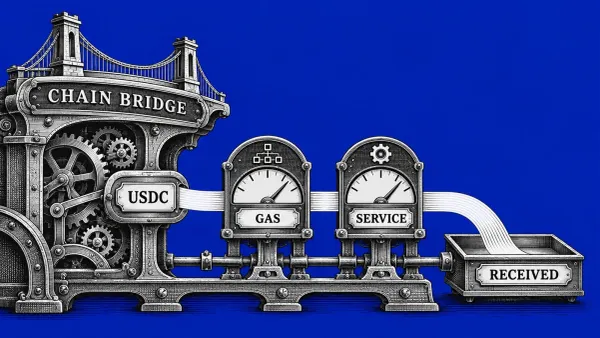
In particular, native USDC and a bridge-issued token such as USDC.e aren't automatically interchangeable for deposits. The native USDC versus USDC.e distinction helps identify that extra dependency. I wouldn't add a bridge solely to save an apparent fee until the destination's support for the resulting token was clear; another transaction also adds another place for the route to fail.
A small first deposit can reduce the amount exposed to an address or compatibility mistake, provided it meets the provider's minimum and the extra network cost is acceptable. Wait for the provider to credit it before considering the rest. This check doesn't establish future account eligibility or remove a withdrawal hold.
Compare the final USD proceeds without counting fees twice
Separate the cost of moving USDC from the cost of selling it. A wallet transfer may require a network fee. The conversion can have an explicit trading fee and a spread, meaning a difference between the reference market price and the price offered to you. Kraken's fee schedule explains that its instant buy/sell price includes a spread and that its Pro fee schedule is separate. A low trading fee doesn't establish a low total cash-out cost.
Use this calculation after confirming the quote's definitions: USD expected at the bank = quoted USD sale proceeds after conversion costs − withdrawal fee − any receiving or intermediary bank charges. If the quote already includes the spread and trading fee, don't subtract them again. Keep a network fee paid separately in another asset as a separate cost when comparing routes.
For a hypothetical example, suppose a provider quotes $998 after conversion costs for 1,000 USDC. If the bank withdrawal costs $4 and the bank charges nothing, the expected bank credit is $994. A separately paid network fee worth $2 would reduce the economic proceeds to $992, while the bank still receives $994. These are example inputs, not a provider quote or a promise of today's rate.
I'd compare providers using the same starting USDC amount and a complete bank withdrawal, including any extra transfer needed to reach the provider. A public conversion rate alone doesn't include enough information to make that comparison. Avoid switching routes mid-transfer because another calculator displays a fractionally higher rounded price.
Sell USDC for USD and check the completed amount
Once the supported USDC deposit is credited, open the provider's sale or conversion tool, select USDC as the asset to sell and USD as the currency to receive, then enter the amount. Check the USD proceeds and all displayed charges before confirming. Kraken's USDC sale page describes selecting USD for the conversion and withdrawing the fiat proceeds afterward; use the controls offered to your account rather than assuming every app has the same labels.
For a direct cash-out order, confirm the payout destination and follow that order's transfer instructions. Check the required amount, network and address before sending. Keep the order reference so you can follow the sale and payout separately if one stage is delayed.
After an exchange sale, check the actual USD balance and the amount available to withdraw. Keep the sale confirmation so you can distinguish a completed trade from a pending order or a display estimate. If you use a limit order, check the filled amount before planning a withdrawal; an order at your chosen price isn't a completed sale.
Keep the acquisition and sale records together, including amounts and fees. The IRS treats digital assets, including stablecoins, as property and requires reporting of applicable digital-asset transactions even when they don't produce a taxable gain or loss. A price close to $1 doesn't remove the recordkeeping step.
Follow the USD withdrawal through to your bank
Withdrawal availability can also depend on earlier funding activity. Kraken's cash withdrawal table identifies temporary holds associated with certain purchase and deposit methods, including ACH funding. A visible USD balance doesn't by itself establish that the entire amount can leave immediately. Read the hold or availability notice for your own account before relying on a payment deadline.
Submit the supported USD bank withdrawal only after checking its recipient and final amount. Save the confirmation and follow its status until the receiving bank credits the dollars. Kraken's ACH guidance counts business days and excludes bank holidays; same-day processing is not the same promise as a same-day bank credit.
If the expected window passes, contact the provider through its official site with the withdrawal reference and relevant account notice. For an uncredited crypto deposit, preserve the network and transaction hash instead. Sending the deposit again won't explain the first transaction, and paying an unsolicited agent a release fee won't verify a bank transfer.
If your current token or network doesn’t match the provider’s deposit options, the USDC network guides help identify it. The transfer and bridge guides cover a route change if your current network isn't supported.