Chain Bridge

Contents
Buy a used ASIC only when the seller can identify the actual machine, show it working under stated conditions, and put the acceptance and return terms in writing. I'd pause a cheap offer if its evidence stops at a stock photo and a hashrate screenshot. The useful comparison is the cost of receiving a machine you can safely test and keep, with a clear remedy if its condition doesn't match the sale.
Identify the unit behind the listing
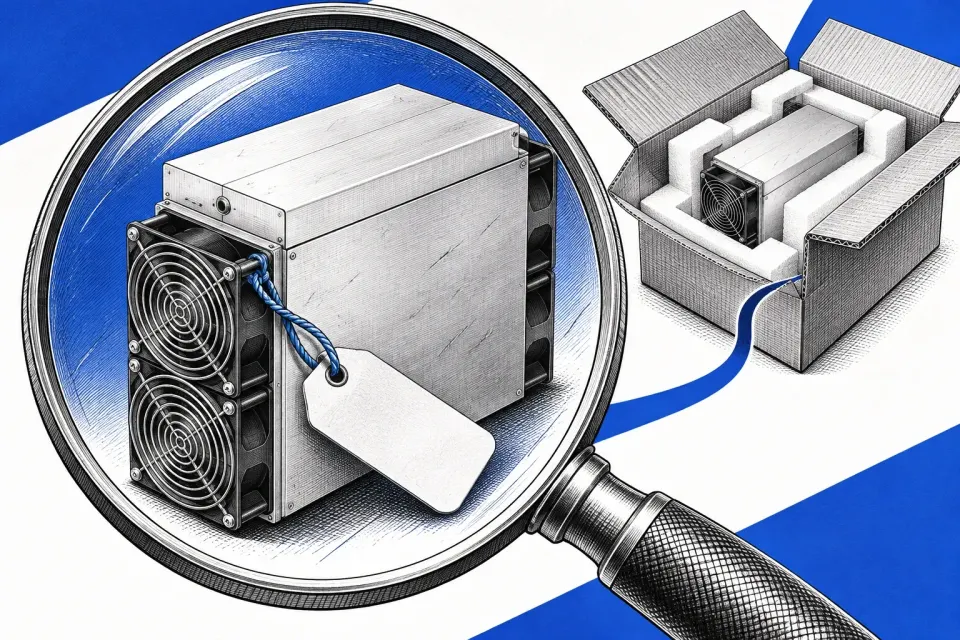
Request current photos of the exact miner, its model and hashrate variant, chassis serial number, power supply label, connectors and visible condition. Match that identity to the invoice and the seller's test record. If a listing covers a batch, agree which serial numbers you'll receive and whether the seller may substitute another unit.
Ask about previous operating conditions, repairs, replaced boards or power supplies, overclocking, third-party firmware and immersion use. A clean case doesn't establish an untouched machine. “Refurbished” needs a work record: what was repaired or replaced, by whom, what was checked afterward and which parts the seller's warranty covers.
Don't reject every repaired or previously immersed miner automatically. Require a model-compatible, documented configuration and a service path for that condition. If the seller can't explain mixed board revisions, fluid removal or a changed PSU, the uncertainty belongs in the purchase decision before payment.
Ask for a sustained run you can connect to that unit
Request a continuous operating record rather than a favorable instant. D-Central's secondhand buying checklist asks for a 24-hour burn-in record. I'd use that as a starting request for evidence, not a universal certificate of health or a guarantee of remaining life. Agree the test duration and acceptance criteria with the seller for the exact model and configuration.
| Evidence | What it should establish | What still needs checking |
|---|---|---|
| Identity and settings | Serial, model, PSU, firmware version and power profile tied to the run | A generic dashboard can belong to a different unit or a reduced-power configuration. |
| Dashboard and miner log | Running time, expected boards and chips, board-level rates, temperatures, fan readings and errors | A short successful boot doesn't show sustained operation or explain earlier restarts. |
| Pool-side record | Accepted work and interruptions over the corresponding period, with worker identity connected privately to the unit | A pool average covers its own time window and doesn't replace the miner's log. |
| Power and environment | Wall-power reading, supply conditions, ambient conditions and the mode used for the run | A nameplate wattage or a firmware estimate isn't a measurement of that used unit. |
Focus the table and scroll sideways to read all columns.
The Bitmain S19/S19 Pro monitoring instructions explain that the dashboard reports detected chips, board hashrates, inlet and outlet temperatures, and chip state. Read those details alongside the log. A green overall status alone leaves too much unanswered.
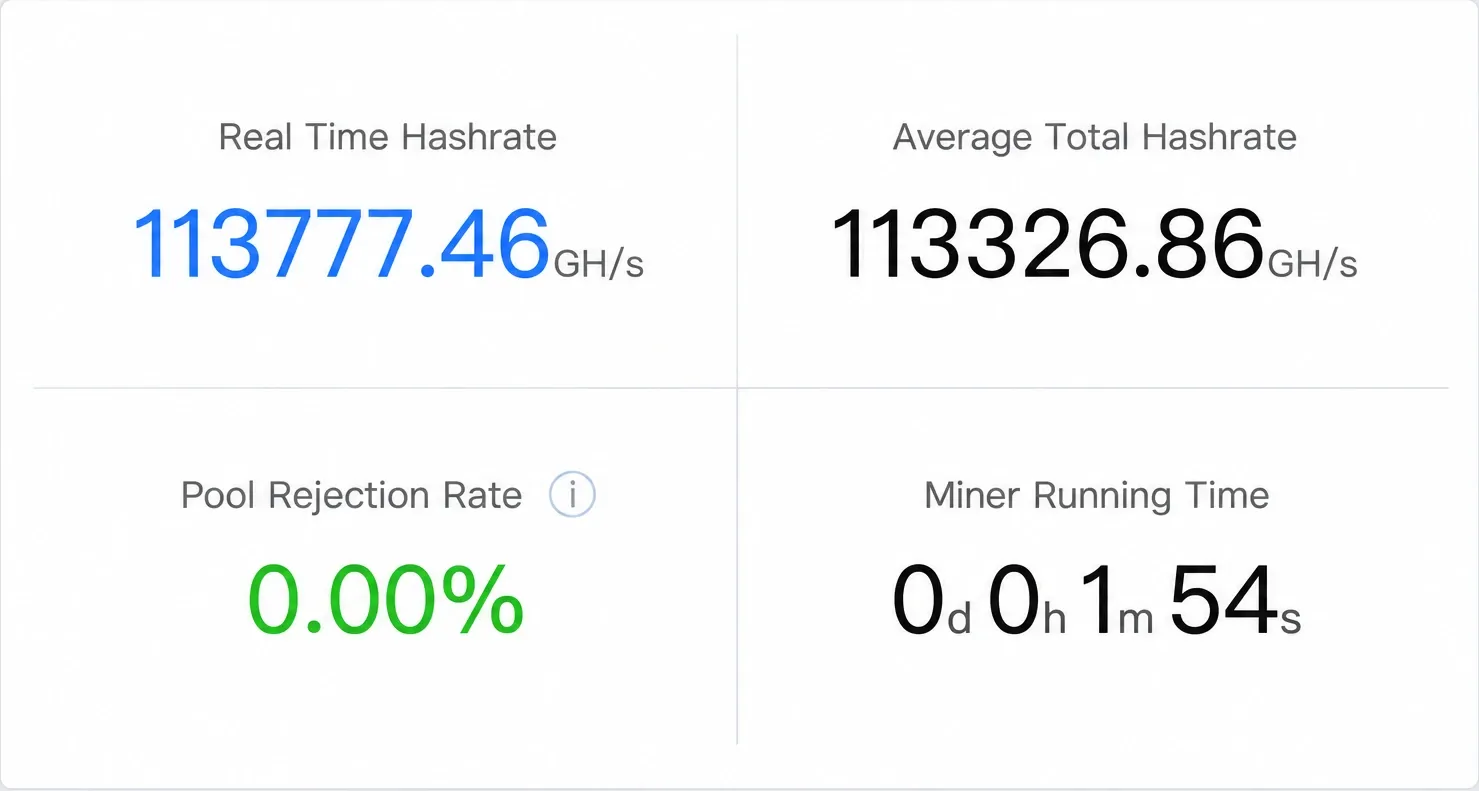
Running time is especially useful when assessing a screenshot. In Bitmain's historical S19-family dashboard example, the counter is only 1 minute 54 seconds. Its displayed rates and zero rejection value describe that example screen; they don't prove that a machine offered for sale has passed a long test. Ask for the record spanning the agreed period, including any restart and its explanation.
Compare performance with the exact variant and stated test conditions. For example, Bitmain specifies the S19 Pro 110T at 110 TH/s ±3% and 3,250 W ±5% at 25°C; the same specifications page also lists a 105T variant. Those figures aren't a universal allowance for missing boards, a temperature target for every ASIC or proof that a used unit meets its sale description.
I'd stop short of a purchase if an unexplained board loss, repeated restart or mismatch between identity and records remains unresolved. Ask for diagnosis and a new complete record after any repair. Don't adopt a generic percentage discount in hashrate as an acceptable amount of wear.
Separate manufacturer coverage from seller promises
Get the manufacturer's warranty status for the actual serial number, any original purchase evidence required for service, and confirmation of your eligibility to use the remaining coverage. Bitmain calculates its product warranty from the official sales shipment date, subject to the sales contract. A resale date doesn't establish a fresh manufacturer's warranty period.
A seller's “one-year warranty” is a separate promise. Name the business responsible, the covered components, exclusions, repair location, shipping costs and the remedy if repair fails. Ask whether previous firmware changes, repairs or immersion affect that promise. Don't assume the manufacturer's coverage transfers to you or that either warranty includes a refund.
Agree the arrival test and dead-on-arrival terms before ordering. The written terms should say when the reporting clock starts, how long you have to test, what counts as a mismatch, what evidence is required, and whether the remedy is repair, replacement or refund. Resolve return authorization, freight, restocking deductions and who bears transit damage. If your electrician or host can't test before that deadline, arrange a different window or choose a purchase you can inspect in time.
Price the transaction you can complete
Compare an itemized delivered quote: hardware, included PSU and cables, shipping, insurance, applicable taxes or import charges, known repairs and any parts needed for the intended setup. Confirm the destination, dispatch date and whether the offer is for working equipment or parts. A foreign storefront's displayed price and an unavailable shipping destination don't establish a US delivered cost.
Confirm the seller's legal identity and contact route independently, then match the invoice and payment recipient to that business. Read the protections for the specific marketplace, payment method and item category before relying on them. If escrow is proposed, establish the actual provider, release conditions, inspection window and dispute route before paying; the word “escrow” in a message isn't a protection by itself.
Keep operating economics as a separate decision. Once the machine's condition, power draw and delivered price are credible, use them in a profitability calculation with your electricity and other costs. A lower purchase price doesn't establish faster payback, and an old model's remaining useful life can't be read from its age alone.
Preserve the arrival record before changing anything
Prepare the correct electrical supply, cooling and network connection before delivery. Check the exact miner and PSU documentation against the installed circuit and connectors; don't rely on “standard outlet” in a listing. Any wall-power meter must be rated for that supply, current and continuous load. Ask a qualified electrician to verify an uncertain circuit rather than testing an industrial miner through an ordinary household smart plug.
Bitmain's receiving instructions call for photos of damaged packaging, checks for dents, cracks, broken fan blades and cables, and inspection for loose heatsinks through the fan openings. Apply the appropriate manufacturer's receiving procedure to your unit. Keep the packaging and match the received serial and PSU to the order before powering on. Stop and contact the seller if there is damage or a loose part; don't power it merely to satisfy a deadline.
Before testing, preserve the initial firmware version, configuration and available logs. Use the manufacturer's supported handover procedure to secure access and set your own pool destinations before hashing; agree any required configuration changes with the seller in advance. Don't expose the miner's administration page to the public internet. Save the operating record through the agreed acceptance period. Avoid an immediate firmware flash or disassembly that could erase evidence or complicate the agreed claim process. Never open a PSU as an arrival check.
If the unit doesn't match the sale, report it through the agreed channel within the deadline, attach the identity, arrival photos and relevant records, and obtain written return or repair instructions. For direct delivery to a host, name who receives, inspects and files the claim; the seller's clock may run before you personally see the miner.
My buying threshold is a complete evidence packet and terms I can act on: the identified unit, its operating record, the delivered quote and the written remedy. If one is missing, resolve it before sending money. Use the Mining hub to plan the power, cooling and pool choices that follow an acceptable purchase.