Chain Bridge

Contents
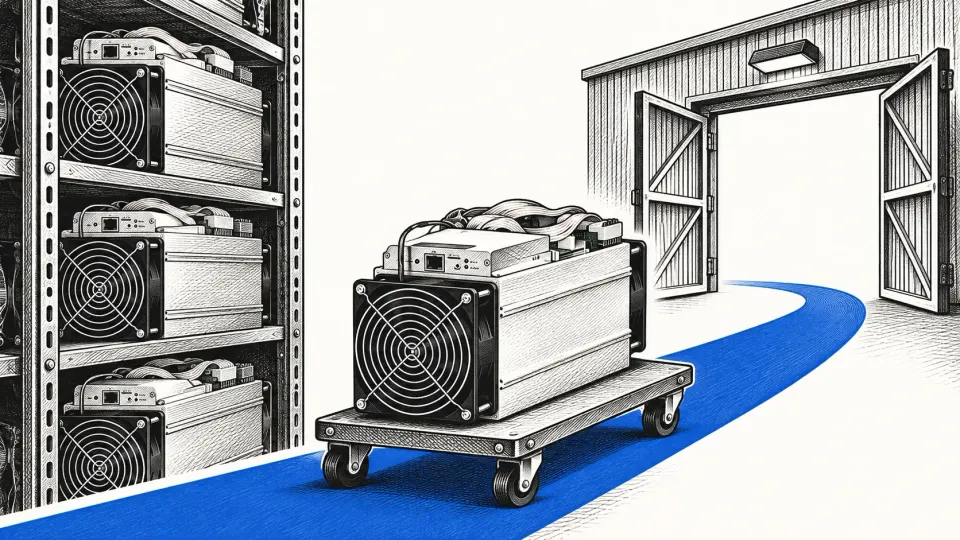
Choose ASIC hosting only after the written offer identifies your hardware, the full bill, who controls its mining rewards, and how you can get the machine back. I'd pass on a low electricity rate if the provider won't resolve those terms before payment. Hosting can move heat, noise and maintenance out of your home, but it puts valuable equipment and ongoing costs under someone else's operational control.
Start with the agreement for the specific site and miner. A brand's general promises don't tell you what happens when that machine arrives late, stops hashing or becomes uneconomic to run.
Establish what you own and who holds it
Conventional hosted mining means you own a physical miner and pay another business to operate it. With cloud mining, you buy access to hashrate instead. River's explanation of hosted and cloud mining makes that ownership distinction. Don't compare a hardware purchase, a rented-hashrate contract and an electricity tariff as though they buy the same thing.
Request the seller's legal name, the hosting counterparty, the facility operator and the actual hosting location. Ask whether the host can subcontract or relocate the machine, how it gives notice and what refusing a move would cost. Compass's public hosting agreement, for example, permits third-party hosting and relocation; its relocation clause can make an objection lead to a return at the customer's expense and a termination fee. A US facility address doesn't establish that every party to your contract is a US company.
Make the equipment identifiable. Keep the invoice, model and condition, serial-number record, shipping receipt and facility intake report together. Require confirmation of title and disclosure of any financing or security interest. Compass provides serial numbers on request under its public agreement, so ask for them rather than assuming they'll arrive automatically.
Read substitution provisions carefully. The draft sample agreement linked by OneMiners allows equivalent computational capacity and broad operational delegation. If owning and controlling a particular machine is your reason for choosing hosting, get a written answer about when substitution can occur, what remains yours and how the original hardware is recovered. A dashboard entry alone doesn't settle those rights.
Turn the advertised rate into a complete offer
Get an itemized quote for your exact model, power mode, quantity and site. Confirm whether you can ship an existing miner or must buy through the provider. Antminer Distribution's hosting offer requires a hardware purchase through its shop, while Endless accepts equipment bought elsewhere. Those are different purchase routes even before you compare energy prices.
| Part of the offer | Get in writing | Why it changes the decision |
|---|---|---|
| Energy and recurring service | Rate, metering or rated-load basis, calendar hours, cooling, rack fees, taxes and other pass-through charges | A lower cents-per-kWh figure can produce a higher total bill. |
| Money due before operation | Hardware price, shipping, setup, deposit and prepaid energy, each shown separately | A refundable deposit and consumed prepaid energy aren't the same asset. |
| Price changes and commitment | Fixed or variable rate, permitted adjustments, term, renewal and notice deadline | A discounted rate can require a long commitment and extra cash upfront. |
| Service and physical exit | Repair approval, parts, deracking, packaging, freight, storage and early-termination charges | The cost continues beyond electricity and the final hashing day. |
Focus the table and scroll sideways to read all columns.
For a concrete condition behind a headline, OneMiners advertises 5.5¢/kWh with seven years of prepaid electricity. The same page lists different rates for online-ordered and externally supplied miners. Its separate fee schedule adds ancillary charges, including deracking, packing, freight and some early-termination costs. “No service fees” on a promotional page doesn't remove every other charge.
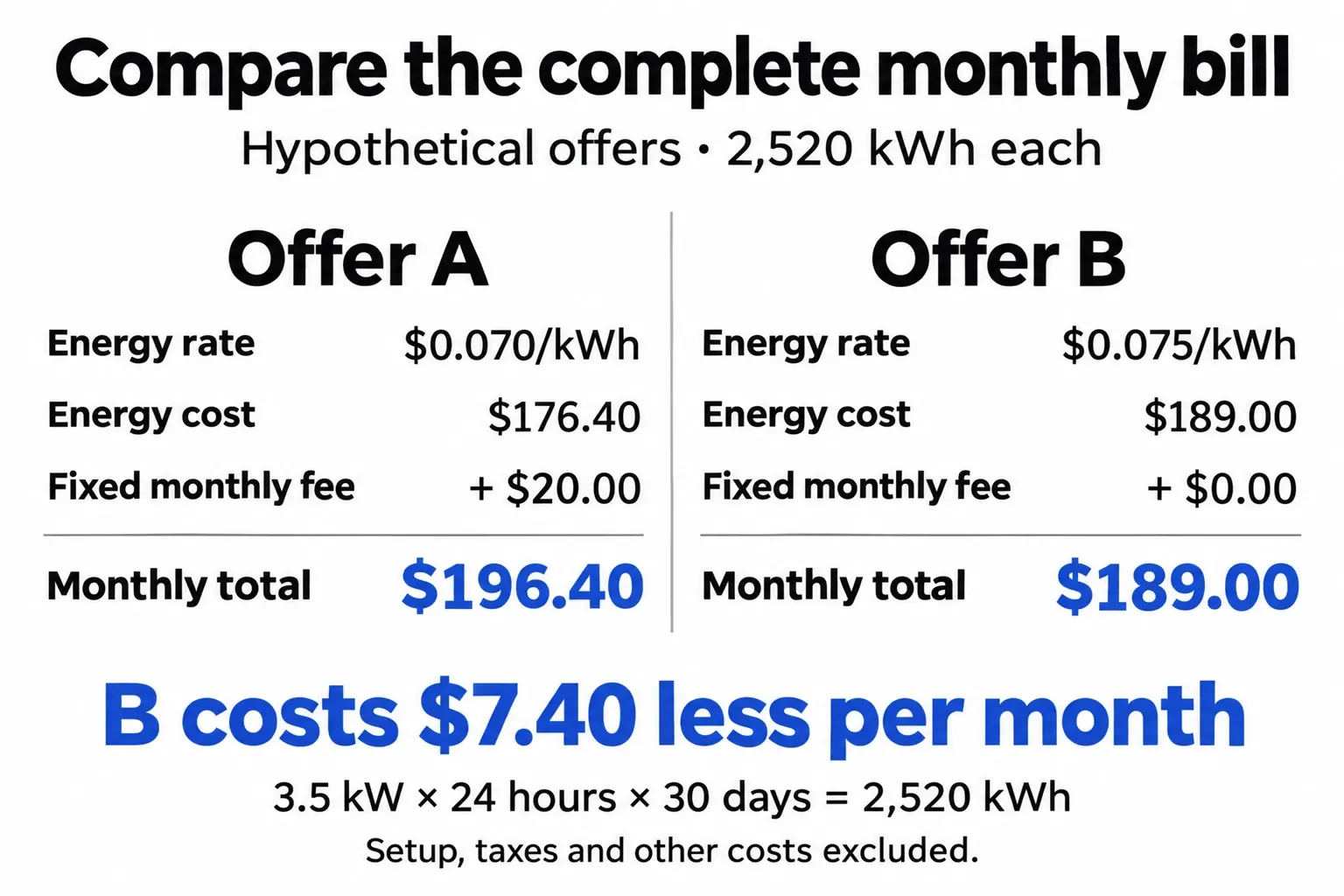
Here's a hypothetical comparison using one miner drawing a constant 3.5 kW for 30 full days: 3.5 × 24 × 30 = 2,520 kWh. Offer A charges $0.07/kWh plus $20 a month, giving $196.40. Offer B charges $0.075/kWh with no separate monthly charge, giving $189.00. Under these assumptions, B costs $7.40 less despite its higher energy rate. These are example offers, with no taxes, setup or other charges included.
I'd keep deposit recovery and prepaid-energy recovery as separate questions. Ask where unused money goes if the miner fails, the host closes the site or you leave. The OneMiners draft sample makes prepaid electricity specific to a machine and nonrefundable and nontransferable. Get the applicable refund and transfer terms before paying for a long discount period.
Tie delivery and billing to observable events
Separate the hardware shipping date, facility receipt, successful intake check, first accepted pool work and billing start. Ask what happens if the miner arrives damaged, is rejected or waits for rack space. Keep the carrier's proof of delivery, but also require the site's serial-number and condition record; delivery alone doesn't show that the miner hashes.
Endless's hosting page illustrates the distinction: it describes rack time as an estimate, notes batch power-on in Texas, and says billing starts when the facility first reports the miner running. Days prepaid before that are credited to the next bill. Its terms make facility delivery count as delivery to the owner and make the receiving check important to the arrival record. Get the same milestones resolved for your offer instead of borrowing another host's policy.
Request a deadline and a remedy for a delayed start. The estimated online date on a sales listing is weaker than a contractual right to cancel and recover money. Compass's public agreement says commencement can be delayed by weeks or months. Build that wait into the purchase decision before sending hardware or paying for it.
Read the uptime definition and the credit separately
Ask what the percentage measures: site power availability, a running miner, accepted pool work or equivalent capacity. Then ask for the measurement period, exclusions, evidence, claim deadline and remedy. A historical average, an operating objective and a contractual service credit answer different questions.
Compass's service-level clause calls for commercially reasonable efforts toward 95% monthly availability and excludes specified interruptions, including demand-response curtailment. Curtailment means reducing or stopping the site's electricity load; excluded hours can still mean lost mining work. The agreement provides qualifying service credits under its billing provisions, rather than a general promise to replace all lost Bitcoin revenue.
OneMiners' US page promises 95% uptime and full compensation for lost mining time, but its linked draft sample's uptime clause calls 95% a monthly objective, not a guarantee. It excludes several outage types and says a credit may be issued after two consecutive 90-day periods of qualifying shortfall. The credit is noncash, and the clause excludes lost-profit claims. Because this is a draft sample, request the actual agreement and resolve the discrepancy in writing; don't assume either the marketing sentence or the sample is your final remedy.
Require a worked bill for a month containing maintenance, curtailment and a miner failure. Show which hours earn rewards, which consume power, which remain billable and which qualify for a credit. Don't reduce every cost by an advertised uptime percentage. I'd reject a payback estimate that needs full production while the agreement permits material excluded downtime.
Keep pool, reward and repair authority explicit
Ask who selects the pool, owns its account and changes the payout address. Identify whether rewards go directly from the pool to your wallet or first enter a host-controlled balance, and whether hosting fees are invoiced separately or deducted from proceeds. Request the change-approval process and an independent way to verify accepted work and payments.
Even when the customer chooses the pool, changes may require the host's cooperation. Compass's pool-selection clause requires two business days' notice for a pool or address change and allows labor costs for excess changes. Endless's public hosting page says pool rewards go directly to the customer's wallet, but its public dashboard demo is a sample account. A sample balance or uptime display isn't evidence of your machine's production.
Check telemetry for the actual site. Endless says its Texas site readings aren't connected yet and describes pool readings for supported pools instead. Ask what monitoring is available for your miner, how delayed readings are labeled, what alerts reach you and who responds when the pool reports no work. Keep access to the pool records and invoices you need to reconcile the host's report.
Set the repair spending limit, approval process, parts policy and return-to-service test before a fault occurs. Compass's public agreement authorizes repair work described in an estimate and allows additional discovered work to change the final cost. Endless lists different repair-approval arrangements for its Washington and Texas sites. “Maintenance included” needs a definition of covered labor, excluded parts and shipping, and who earns rewards while equipment is being tested.
Get written approval for any firmware change or overclocking. Compass's agreement requires prior written approval for modifications and can impose charges for noncompliant equipment. A promised increase in hashrate is incomplete without the corresponding power bill, warranty position and permission to run that mode.
Price the return before the machine leaves your hands
Read renewal, notice, early termination, shutdown, payment-default and physical-release terms together. Ask for a worked exit statement both at normal term end and during an early departure. Include unpaid invoices, prepaid balances, deposit deductions, deracking, packing, storage, carrier choice, transit cover and the time until collection or shipment.
Ownership doesn't make release unconditional. Compass's public agreement conditions return on payment, charges for deracking, and describes default remedies involving rewards and hardware. Its termination clause can require the hosting fees for the remaining term. Have the provider explain the amount and process for your service order before relying on “you can withdraw your miner.”
For damage protection, request the actual policy or plan, named insured parties, covered location and equipment, exclusions, deductible, valuation and claim process. The Compass protection addendum expressly says it isn't insurance. It retains limited liability under stated conditions, caps protection and excludes events including flood and wear. Don't turn a security claim or a protection-plan label into an assumption of full replacement cover.
My threshold is a complete agreement and site-specific order that make the bill, control and return route understandable. If the provider can't resolve a material contradiction, keep the money and hardware under your control. Once the offer is complete, use those actual costs and downtime rules to decide whether mining remains affordable; the mining library is the place to continue that planning.