Chain Bridge

Contents
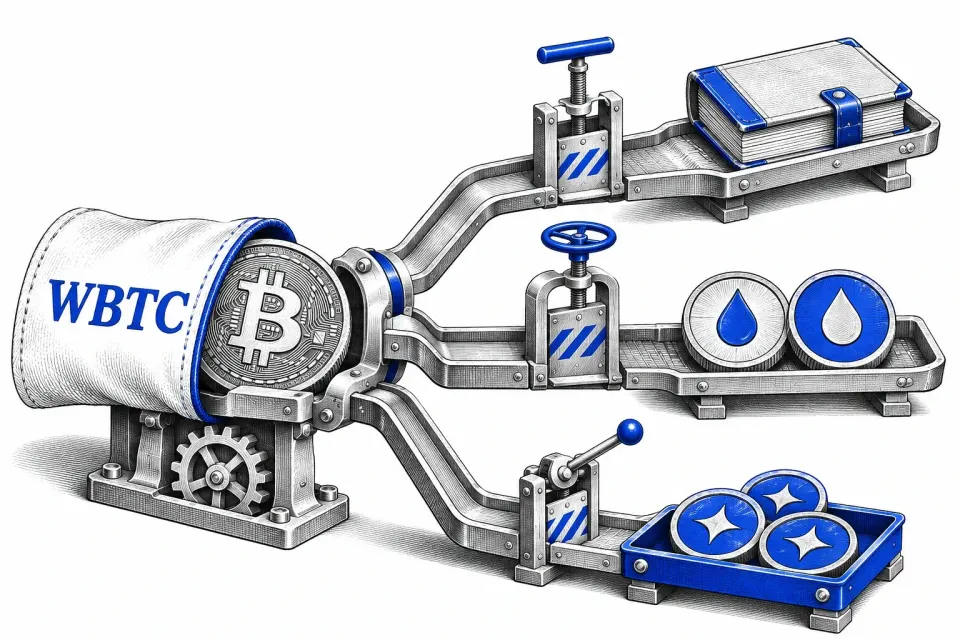
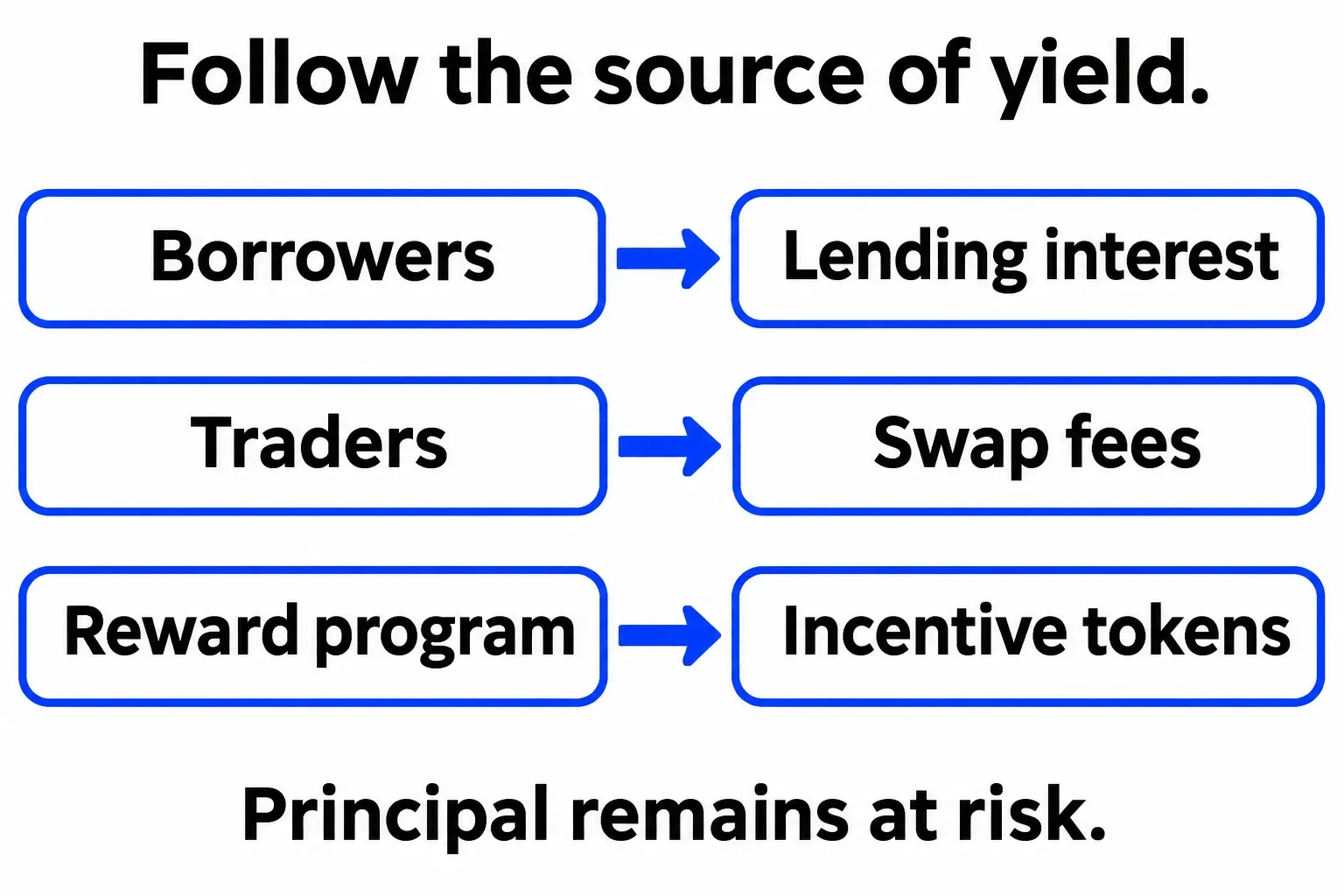
WBTC can earn yield when you commit it to a separate lending, liquidity or staking arrangement. Holding ordinary WBTC in a wallet does not itself pay interest. Before choosing an offer, identify who pays the return, which token you receive, what can happen to your deposit and how you can get it back.
I'd start with an unleveraged position whose payment source and exit I can explain. A larger advertised APY is little help if it depends on a falling reward token, changes your Bitcoin exposure or leaves funds unavailable when you need them. You can also keep BTC without seeking yield if the extra dependencies don't suit your purpose.
Separate the payment mechanisms
WBTC's project description presents it as a Bitcoin-backed token usable in lending, borrowing and liquidity markets. The wrapper supplies access to those applications; each application supplies its own return and risks. Bitcoin itself uses proof of work. A WBTC staking product on another network is not a reward for validating Bitcoin blocks.
| Arrangement | Source of return | Question before depositing |
|---|---|---|
| Lending supply | Borrower interest, with any separate incentives identified. | How much unborrowed liquidity is available for withdrawal? |
| Liquidity provision | Swap fees from trading against your active liquidity. | How can price movement change the assets you withdraw? |
| Network staking or delegation | The staking program's rewards under its validator and delegation rules. | Which network is being supported, which token pays rewards, and what is the exit delay? |
| Promotional incentives | A separately funded reward program. | What remains of the return when the promotion ends? |
Lending interest depends on borrowing and available liquidity
Aave V3's protocol overview describes supplier yield funded by borrower interest, net of the reserve factor allocated away from suppliers. Rates adjust with utilization. A displayed supply rate is therefore a current market condition, not a fixed promise for your entire holding period. Verify that your exact WBTC token and network are supported in the intended market before treating the example as available to you.
Supplying and borrowing are separate decisions. Aave issues interest-bearing aTokens for supplied assets; redeeming them returns the underlying asset and accrued interest, subject to available liquidity and any active borrowing constraints. Its withdrawal explanation says that enough liquidity must remain unborrowed. A liquid-looking receipt token is not an unconditional promise of immediate withdrawal.
Borrowing against that deposit adds debt interest and liquidation risk. I wouldn't borrow merely to turn a modest supply return into a larger-looking strategy. First compare the borrow cost, the asset you owe and how falling collateral value or rising debt can force liquidation. Avoid treating the gross return on a second investment as the profit from the whole arrangement.
Liquidity fees can accompany a changing token balance
In a liquidity pool, traders pay to swap against deposited assets. Uniswap's fee documentation explains that swap fees accrue to active liquidity, with details depending on the protocol version. A pool's trading volume and fee level don't establish what your particular position will earn.
For concentrated liquidity, the chosen price range matters. Uniswap's range explanation says that a position stops earning swap fees when the market moves outside its range. As trades move the price, the position accumulates more of one token and less of the other; it can end up entirely in one asset. Fees received don't guarantee that withdrawing the pool position leaves you better off than holding the original assets separately.
Check both tokens, the chosen range and the position's current composition. WBTC paired with a stablecoin does not preserve the same exposure as holding WBTC alone. A narrow range can require decisions about rebalancing, further transactions and costs. I'd skip a pool if I cannot explain which asset I could be left holding after a large price move.
Real WBTC staking still needs a network and an exit
Some WBTC offers do involve staking rather than lending. Starknet's Bitcoin staking guide describes delegation of supported tokenized Bitcoin on Starknet, including WBTC, to validators. It separately describes liquid staking tokens representing staked positions. This supports Starknet's staking arrangement; it doesn't change Bitcoin's proof-of-work consensus.
The reward asset matters. For example, Xverse's WBTC delegation explanation describes rewards paid in STRK and an unstaking cooldown. Receiving STRK is different from your WBTC balance automatically growing. Compare the reward's realizable value after claiming and selling costs, and read the current cooldown and validator terms before committing. Keep the required network fee token available; a wallet subsidizing fees is a provider-specific feature.
Keep direct delegation and liquid staking separate. A liquid staking token adds the terms of its provider and the market in which you might sell it. Selling that token at a market quote is a different exit from waiting for the provider's redemption process. A statement about no slashing in one documented arrangement does not remove wrapper custody, bridge, contract or withdrawal risk, and it does not apply automatically to every staking product. Check the rules of the actual arrangement rather than treating “staking” as a complete risk description.
Compare the complete position, including its exit
Ask for a breakdown of the advertised return: underlying interest or trading fees, separate reward tokens, and any temporary promotion. Read whether the displayed figure is APR or APY and what compounding it assumes. An annualized display is not the amount already earned, and reinvesting a reward token may require another trade or transaction.
For your intended holding period, compare realizable rewards with entry, claim, management, rebalancing and exit costs. Use the same unit throughout: a larger dollar value can result from a rising Bitcoin price without any increase in the amount of Bitcoin you own. Likewise, more reward tokens are not necessarily worth more BTC. Don't add rates from different denominators or count the same reinvested reward twice.
Before signing, write down the following in plain language:
- Position: the exact token, chain, protocol and contract you will use, including any bridge or receipt token.
- Payment: who funds the return, the payout token, charges and the conditions that can change the rate.
- Loss: wrapper custody and protocol risks, plus liquidation if you borrow or changing asset composition if you provide liquidity.
- Exit: available liquidity, any cooldown, who can pause relevant actions, and which asset you receive on withdrawal.
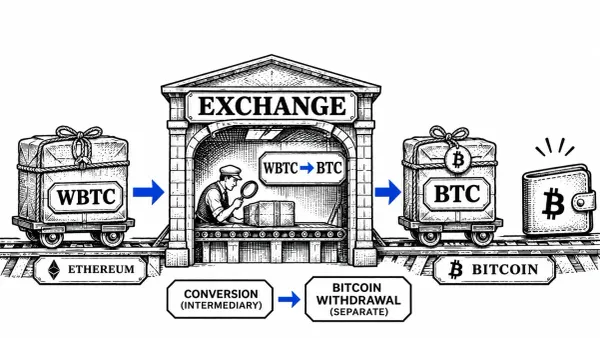
- Destination: the later conversion route if your final goal is native BTC in a Bitcoin wallet.
Aave's risk categories include smart-contract, oracle, collateral and network or bridge risk. The wrapper remains another dependency even if the DeFi application works as designed. A clean audit or an attractive rate doesn't establish that all of these risks are acceptable for your funds.
If you cannot identify the payment source or the withdrawal conditions, I would leave the offer alone. The bridges and wrapped-assets hub covers the wider network choices. When you're ready to return to Bitcoin, remember that sending WBTC directly to a Bitcoin address does not perform that conversion.