Chain Bridge

Contents
I’d choose Bitcoin Core for a node that needs to follow the BTC chain used by your existing wallet, exchange or payment service. Bitcoin Knots offers more relay-policy controls, but you must check the exact build’s consensus rules before treating it as a replacement. The current mainline Knots 29.5.1.knots20260508 includes a BLAKE2b proof-of-work fork, RDTS rules and changed coinbase maturity; it isn’t simply Core with stricter transaction filters.
The useful question is which chain and services your node must validate, followed by which transactions you want it to relay. A familiar interface or a larger node count can’t answer the first question for you.
Check the build before comparing filters
Knots is derived from Core and adds its own changes. That shared ancestry explains the familiar node, wallet and RPC interface, but it doesn’t guarantee that every release accepts the same blocks.
The Knots download page names 29.5.1.knots20260508 as its latest version. The release record was published in November 2026, so the May-looking suffix is not its publication date. This comparison uses that exact tag and Core 32.1, rather than assuming that every build labeled Knots behaves alike.
In the Knots mainnet parameters, the BLAKE2b fork height is 961,640. Its header-validation code rejects the old header form at and after that height with bad-version-blake2b. The new header-hashing implementation uses BLAKE2b, while Core 32.1’s implementation retains its existing hash construction. Changing an OP_RETURN setting cannot reconcile those rules.
That Knots tag also applies RDTS, the Reduced Data Temporary Softfork rules, from its BLAKE2b activation height until the parent block’s median time reaches September 1, 2027. The activation logic makes this a block-validation condition. It isn’t an optional mempool preference, and its scheduled expiry does not undo the proof-of-work fork.
For mining rewards, the same mainnet parameters introduce a rolling maturity of 25,920 blocks for covered rewards beginning at height 979,919. Coverage ends according to RDTS expiry, but a covered reward keeps its longer maturity. Core’s input-validation code uses its ordinary coinbase maturity check instead. Don’t carry a generic “100 confirmations” explanation from an older Knots comparison into this release.
I wouldn’t replace a working BTC backend with this mainline build just to change relay policy. First establish the intended chain and confirm that every dependent wallet, payment processor and mining component supports it. A different build requires its own release and compatibility check; the product name is insufficient.
Separate local relay policy from block validity
Your mempool is your node’s collection of unconfirmed transactions. Relay policy controls which transactions it accepts into that collection and passes to peers. Consensus rules determine which blocks and transactions it accepts as part of its chain.
Core’s policy documentation explicitly separates these layers: its additional mempool and relay rules are local and are not applied to transactions already inside blocks. A transaction rejected by a local relay filter may still reach a miner through another path and appear in a block that passes consensus validation. The current Knots consensus changes are a separate issue from those filters.
| Question | Core 32.1 | Knots 29.5.1.knots20260508 |
|---|---|---|
| Default datacarriersize | 100,000 | 83 |
| What does the option govern? | Aggregate raw data-carrying scriptPubKey size for relay and mining | Data-carrier policy, with broader counting enabled by default |
| Extra data policy | Configurable data-carrier relay | Additional controls including datacarriercost, datacarrierfullcount and maxscriptsize |
| Can a relay setting establish chain compatibility? | No | No; inspect this build’s consensus changes first |
The defaults come from the pinned Core policy constants and Knots policy constants. Core’s option description applies its cap across multiple data-carrying outputs. These values are policy limits, not interchangeable counts of useful payload bytes and not Bitcoin’s block-size limit.
If your only requirement is a smaller OP_RETURN relay cap, Core already exposes datacarriersize. Its 30.0 release notes document datacarriersize=83 as the setting that restores the previous size limit. That choice does not recreate every older policy rule or every Knots filter. I’d define the behavior I need before changing clients.
Knots’ configuration code exposes additional data-cost and script controls. Its corepolicy option changes a group of policy defaults, with explicit settings taking precedence over soft-set defaults. It does not turn the current mainline build into a Core-consensus build. Treat a saved configuration as part of the comparison, rather than comparing two logos.
Read node counts as a crawler snapshot
The captured Coin Dance node summary reported 22,062 public nodes: 20,013 labeled Core and 2,013 labeled Knots, with the remainder using other implementations. Coin Dance says it corrects the count to omit duplicate and non-listening nodes. Its version table includes several different Knots builds, so the combined count cannot establish support for one release’s rules.
These are observations of public nodes, not a count of unique owners, a hash-rate measurement or a consensus vote. Bitref’s methodology likewise describes charts based mainly on reachable, listening nodes and their user agents. Private or unreachable nodes fall outside that view, and a reported client string is not proof of every rule being enforced.
I use those figures to understand the visible deployment mix. I wouldn’t use them to promise faster synchronization, lower CPU use or safer validation. None of those performance conclusions follows from a node count.
Identify the running node without changing it
Before planning a change, record the binary’s version, launch configuration and data-directory path. For an existing Core node, the following read-only RPC calls help identify the server and its current chain. Enter them through your own local connection; don’t paste instructions supplied by a stranger into a wallet console.
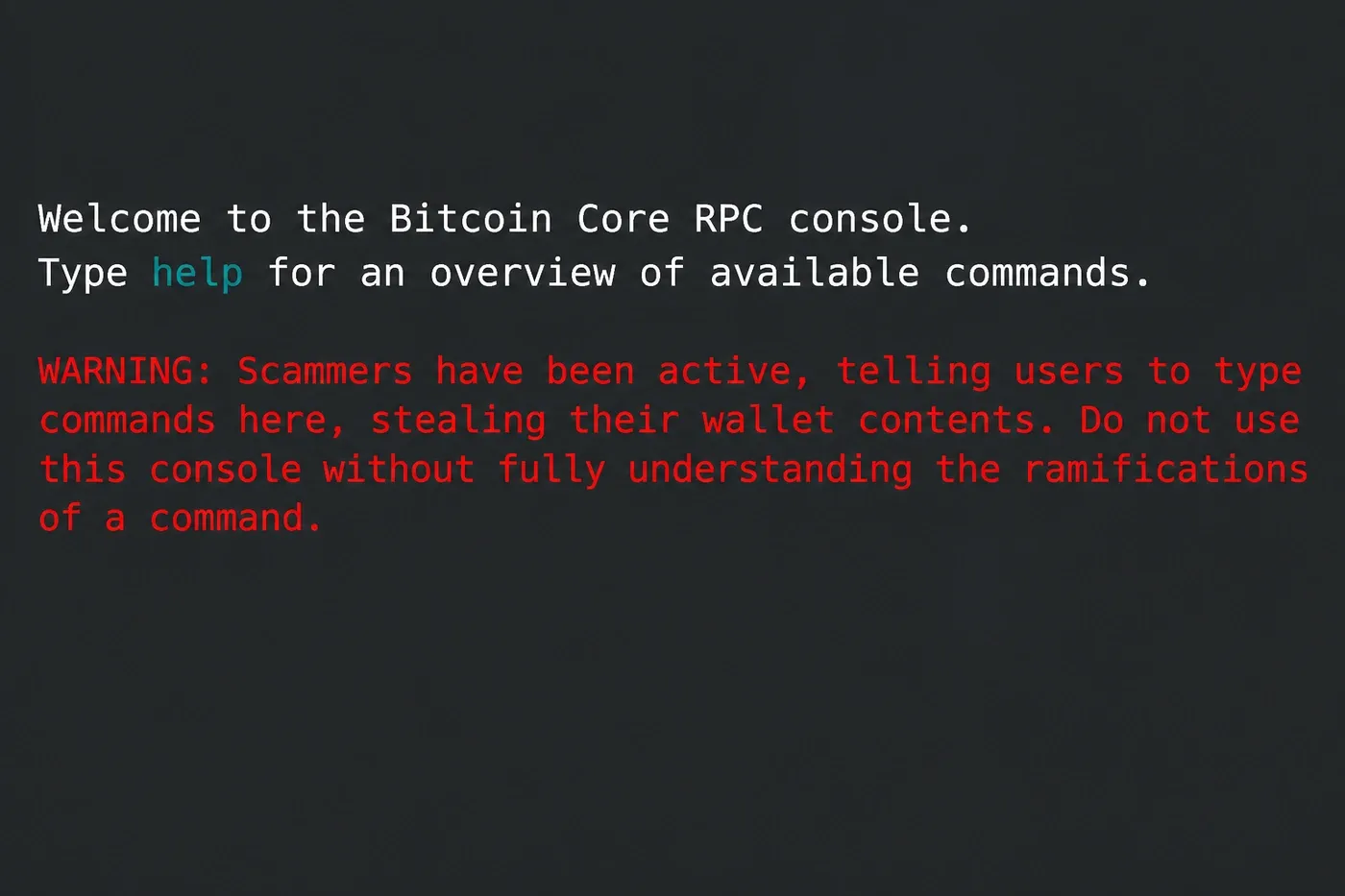
getnetworkinfoCore 32.1’s network RPC definition returns version and subversion. Those describe the server you reached, which matters when your computer has multiple clients or a separate remote backend. Match them to the installed binary and release record; they don’t certify its complete configuration.
getblockchaininfoThe chain RPC definition includes chain, blocks, headers and bestblockhash. A network name such as main, or a high progress percentage, cannot by itself prove agreement with another implementation. Compare a block hash at the same height with the chain your service is intended to use, allowing for normal differences while a new block propagates.
For Core, use the height-specific query below, replacing HEIGHT with an actual height already present on both nodes. The same RPC definition returns the hash in the node’s best chain at that height and rejects a height outside its available chain. Compare that result with a trusted view of the intended chain; comparing two different tip heights can produce a harmless mismatch.
getblockhash HEIGHTIf the node stops advancing or disagrees at a shared height, preserve its logs and configuration and resolve the chain or validation difference before moving funds. Deleting chainstate, weakening checks or swapping clients repeatedly is a poor first response to an unexplained mismatch.
Plan the switch around backups and compatibility
A client change has more consequences than replacing an executable. Wallet format, block and index formats, RPC responses and the platform package all matter. For an ordinary BTC wallet or payment backend, I’d keep the maintained Core route unless a specific, verified requirement justifies a different build.
- Write down the required chain and integrations. Include the wallet, explorer indexer, Lightning service or template builder that actually uses the node. Check its supported release and RPC behavior before changing the backend.
- Protect the original state. Make recoverable wallet backups and preserve the original configuration. Shut the node down completely before making a consistent copy of its data directory. Keep that copy separate from anything the replacement may modify.
- Check the exact direction of migration. A newer Core directory opened by a 29-based derivative can be a downgrade, even if the derivative was published later. Don’t assume that a shared ancestry makes databases, indexes or wallets interchangeable.
- Authenticate the chosen release. Use the project’s official distribution and verify the signatures and signing-key identity. Do not treat a valid signature as proof that the software implements the rules you intend to follow.
- Keep experiments separate. Use an isolated data directory with separate ports if running another node alongside the existing one. Never let two processes write to the same node directory. Confirm chain identity and the dependent service’s behavior before relying on a replacement.
For an old wallet, Core 30.0 removed the ability to create or load BDB legacy wallets and directs users to descriptor migration. Knots’ current release notes say older wallet versions are generally supported. Preserve the original wallet before considering either route; opening an old file is not a reason to overlook a build’s chain rules.
Check the host as well. Core 32.1 lists Linux kernel 3.17, macOS 14 and Windows 10 version 1903 or newer as supported and tested. Knots 29.5.1 lists Linux-kernel systems, macOS 13+ and Windows 10+. These are release-specific support statements, not evidence that one client performs better on the same machine.
There is a concrete format risk in the Core 32.1 release notes: a rebuilt transaction index uses a format previous releases cannot read and will rebuild on downgrade. Preserving downloaded blocks therefore does not guarantee that switching clients needs no indexing or validation work. Current Knots also contains logic to correct inherited chain state that fails its different rules; I wouldn’t point it at the only working copy of a BTC node.
Knots’ download instructions call for checking OpenPGP signatures and obtaining developers’ public keys from independent sources. That protects download authenticity. Maintenance is a separate decision: the existence of an older non-RDTS release does not make it a suitable, current alternative to a maintained Core release.
For mining, identify the software building your actual block templates. Changing a separate desktop node won’t change a pool’s template policy. If your own node supplies templates, its chain and proof-of-work rules become part of the mining setup, so a hardware or pool compatibility check must precede the switch.
Start with the node setup guide if you still need a working backend. For an existing node, settle the required chain, exact release and recovery plan first; then choose the relay settings that serve that purpose. The node guide collection covers the setup and maintenance tasks around that decision.